
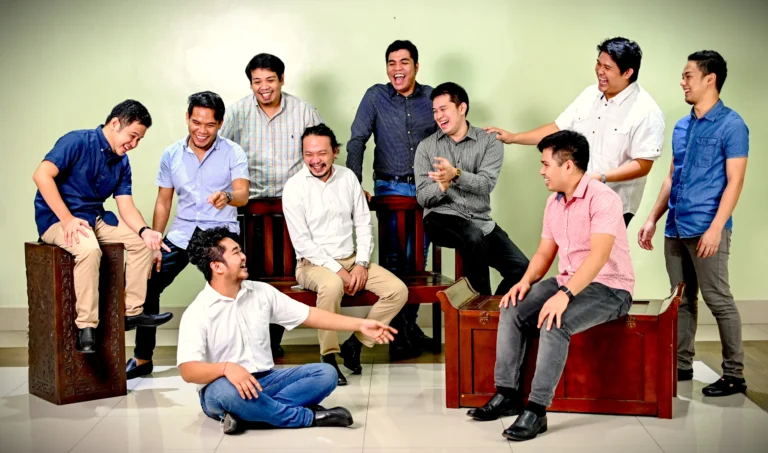
Have you ever faced a moment where pushing forward felt wrong—like your heart was whispering, “not yet”? For me, that moment came during my seminary formation. After completing the Spiritual-Pastoral Formation Year (SPFY), I found the courage to admit to myself and to my formators that I wasn’t ready for third-year theology. The decision was mutual; the formators also discerned that I should be sent to an immersion after SPFY, which we call Off-Seminary Formation. Delaying my formation felt countercultural and terrifying, yet in that pause lay profound transformation.
The Heart of SPFY
What happens during SPFY that empowers seminarians to be so honest about themselves? This profound one-year interlude after the second year of theology offers a non-academic immersion into the inner life. At San José Seminary, it’s revered as the “heart of San José Formation.” We embrace a distinct de more (way of living), withdrawing from the main community to nurture interior growth. My director, Fr. Jing Porcia, SJ, opened our year with words that still resonate: “SPFY separates boys from men in all aspects.”
Since its inception in 1974 as SPFY Batch 1—pioneered by Jesuit psycho-spiritual traditions—nearly 50 batches have walked this path (I was part of SPFY 47; the next will be SPFY 50). The program bends gracefully to God’s providence, as ours did amid the pandemic’s “new normal.” Though we skipped Clinical Pastoral Education (CPE), menial job immersions, and exposures to rural and urban poor communities because of the pandemic, we received the essentials: Psycho-Spiritual Integration (PSI), seminars on Human Sexuality and Affectivity, explorations of the Enneagram and Genogram, modules on Integrity in Ministry and Accompaniment, Dream and Art Workshops, recollections, and an 8-day retreat. These culminated in a life-changing 30-day silent retreat, what some call the “heart of the heart of San José formation.”
The Hard Part: Getting Real
SPFY forges a brotherhood that endures, though not all proceed to third-year theology. We all carry its fruits—and shadows—into our vocations. Sharing vulnerabilities demands courage; as we know, no one can aid an unwilling heart. Yet in SPFY’s sacred spaces, grace abounds. We entered prayerfully, assured of non-judgment from formators and classmates—and that trust turned fear into freedom. Merging two batches during our time—Tarabay and Hubog—meant we sometimes clashed, but prayerful discernment always led to consensus.
In the silence, the walls I had built around myself crumbled. I realized I was my own harshest critic, clinging to rules like “You must be perfect, or you are not worthy.” What we call “unfreedoms” or “inordinate attachments” in Ignatian spirituality don’t simply vanish—they just become manageable. We may never finish SPFY as perfect persons, but as freer. What we learned about ourselves can either break us or make us. Our response is what truly matters. As a beloved retreat director often exhorts: “Alay lang ng alay”—offer it to God ceaselessly, and that is what I did in that year.
During our long retreat, I wept not only over flaws and habits misaligned with my vocation but also over a quiet Love that had pursued me all my life. Minsan kailangan mo lang talagang tumaya at hayaan ang Diyos na gumabay sa buhay mo—sometimes you just have to trust and let go. Surrendering everything to the Lord may wound the heart and feel unsettling and uncomfortable because of my personality type, yet it has yielded healing and transformation.
Daily practices like the Ignatian Examen shattered the chains I made for myself, shifting my focus from the tormenting question, “Am I good enough?” to the urgent whisper: “Where is God calling me?” Indeed, God sometimes jolts us awake—and suddenly, direction blazed bright in the shadows I had refused to face. I remember one Josefino who told us while we were still in our first year, “Sa San José, tuturuan ka muna maging tao, bago ka turuang maging pari.”
Trusting the Process
One of SPFY’s most valuable lessons was learning to trust the process. We hear this phrase every now and then, but it is always easier said than done. As a person struggling with impatience, I find waiting never easy, especially when what lies ahead is unknown and uncertain.
Some sessions during SPFY cut deep into my innermost being; without careful processing, they could lead to desolation or even departure from the seminary. Sometimes you will be caught off guard.
At first, I didn’t understand why certain things unfolded as they did—but now, as I near the end of my formation at San José, purpose has slowly emerged. It happened for a reason, and God walked with me every step of the way. God’s assurance became even clearer than when I first heard the call.
Formation Beyond the Walls
SPFY wasn’t the end of my journey. It was the seed that bore discerning fruit, ripening in ways I never could have planned. Heeding that “not yet,” I stepped aside from theology and spent two transformative years with Jesuit Volunteers Philippines, serving the Mangyan indigenous communities in the mountains of Mindoro. There, amid humble bamboo homes, shared meals, and laughter echoing through misty peaks, SPFY’s lessons came alive. What I learned about myself and how I handled myself was applied in real life.
What I had learned about accompaniment was no longer abstract, it pulsed in every conversation as I listened to stories of loss and resilience. Integrity became my anchor amid cultural differences. In my heart I prayed, “God, how You wove those threads! In the quiet of those mountains, I glimpsed Your presence to those people—and I was grateful for that ‘not yet’ that led me there.”
True formation isn’t confined to seminary walls—it’s the slow, sacred shaping of the heart for God’s “upside-down” kingdom, where weakness holds strength and pauses precede power. Vulnerability—the terrifying openness SPFY demanded—invites God’s grace precisely because we are unworthy. It is a divine mystery: God leads not through relentless striving, but through holy interruptions.
Life in the Fifth Week
In Ignatian spirituality, the “Fifth Week” of the Spiritual Exercises is a metaphor for life after the formal four-week retreat. It’s the ongoing work of integration: carrying retreat graces, hard-won insights, and a deepening friendship with God into every ordinary moment. The Fifth Week transforms daily life into a perpetual retreat, where awareness of His constant presence turns chores into prayer and struggles into surrender. Life after the 30-day retreat and after SPFY is the real challenge. The battle never ended. The real battle is in how the fruits of the SPFY have formed me into a better version of myself every day.
Life’s deepest growth unfurls in the heart’s hidden chambers. As one classmate remarked, “The heart of formation is the formation of the heart.” One cannot heal—or even see—what one ignores, burying it under busyness or pride. It is very easy to forget. That is why there is a need to constantly remind oneself of the graces received that year. Honesty to oneself continues to crack open those doors, drawing help from unexpected people and places.
I always thank the Lord for the gift of SPFY—for whispering through my heart, for the pause that birthed learning and transformation. In every surrender, His faithful love shines brighter. It was never easy and even unconventional, but it was worthwhile.
—–
Carmelo C. Garcia is a seminarian from the Diocese of Talibon, Bohol residing at San José Seminary. He is now in his last year of formation.