
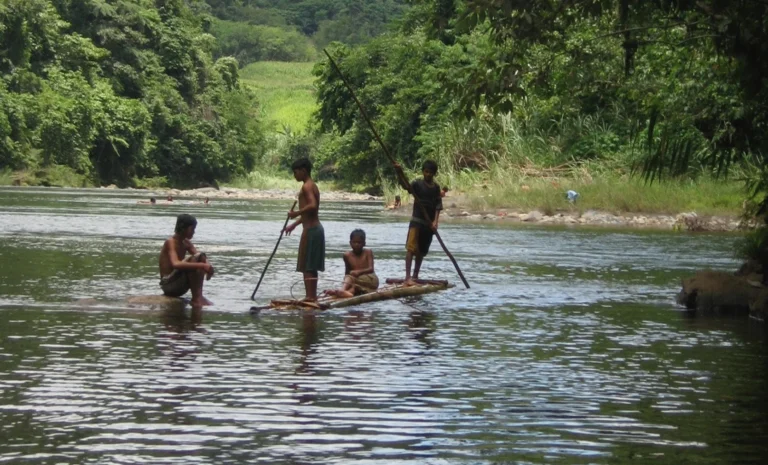
Mindanao has long been touted for its resources. Recognized for its ecological splendor, cultural diversity, and uniqueness, the region is also threatened in many ways. At the same time, there is great faith and occasion for hope if we only seek to love more.
Natural resources degrading
Tough realities first.
Resources and the way the land is used for corporate development are seldom ecologically managed. Some indigenous communities are seconded into disempowering contracts. There is still land grabbing while government commissions that need to be protective of cultures procrastinate in processing ancestral claims and responding to calls for justice. Practices and politics of short-term gain are what small-scale farmers must work with, even indigenous communities. Economic development and how it comes through two-lane, four-lane, six-lane roads that then revert to two lanes, cut up the forest and swamp ecosystems into shrinking clumps. Extensive upland agriculture and expanding false climax species from cogon grass (Imperata cylindrica) to buyo-buyo (Piper aduncum L) replace even the critical mossy forests. Cities consume, sprawl, and waste, aggravating further the instability of the uplands.
Mining has been revitalized over the last two decades. It never went away and nickel surface extraction is an extensive process, not like copper and gold that can go very deep following the different mineral seams rather than extending across the surface area of the land. One example in Davao Oriental is the Pujada Nickel Project that has cleared 200 hectares of forest and threatens Pujada Bay below the Mount Hamiguitan Range Wildlife Sanctuary. When profit can be made in the name of development, it finds a way to disturb the long-term ecological stability, collectively contributing to the disasters of climate change impacting the larger biome system that used to balance the climate. Surprisingly, the local government is now seeking to stop operations, having been opposed for some time by both Interfacing Development Interventions for Sustainability (IDIS) and the Diocese of Mati.
The corn industry now feeds more animals than humans. The story of Cabanglasan in Bukidnon and the photo of land use change explain the transition to basic poor soils, dependence on fertilizers, food insecurity for some, and loss of natural water systems.
Forest loss in general continues and present estimates of regeneration are focused on “trees.” Plantation species are included that are neither reflective of the loss of biodiversity nor the greater carbon absorption of the natural forest even in areas that are technically protected (with a 12-degree slope and 100-meter elevation). Recent figures for natural montane forest loss are 82,683 hectares and substandard “tree growth” that will not regenerate into natural forest including scrub at 47,145 hectares. Environmental Science for Social Change (ESSC) continues to do significant work in Mindanao on natural resources, community management, and disaster adaptation.
These activities rupture in a landscape where biodiversity loss, water extremes, and soil loss are reaching tipping points and highlighting the degradation of the integral ecology of Mindanao. In this we see that the interconnectedness of human suffering and the planet’s health is one critical issue. Our technocracy and predatory extractivism cause both environmental destruction and human displacement.
Cultural growth and renewal
Some activities grow in kinder ways.
For years now, the communities in Bendum and neighboring sitios continue to seek education in the local context and to value their own culture and community dreams. Apu Palamguwan Cultural Education Center (APC) started with the simple initiatives of Datu Menaling and some women in the community. Today, more than 30 teachers and staff come from local villages while four other staff come from Malaybalay or beyond. There are daily struggles with the youth and efforts to comply with the Department of Education, but there is overwhelming consolation as the day is done and the joyous and noisy calls of the children ring out in the night air. Parents experience the value of culture-based education and teachers young and old are dedicating their lives to this community work with the commitment of the Jesuits.
The memories of Fr. Vic Cullen and Fr. Ferruccio Leoni still echo in conversations, and of course there is Fr. Mat Sanchez who occasionally visits. Our strong Bukidnon Mission District is a great expression of hope and community for the indigenous in many parts of Bukidnon. It is amazing as we celebrate over 30 years of community education in APC, people can now see an institution of Kinder to Grade 12 with graduates each year. Many of the APC graduates seek to work locally or frequently return and take up higher education with Jesuit Worldwide Learning (JWL). The sense of belonging is nurtured by the youth community around Balay Laudato Si’ (BLS). The youth with others plant 2,000 indigenous tree seedlings each year and about 70 hectares of regenerating forest are maintained, providing the needed convectional rains in the summer and sustained community water.
Listening as Change
Accompanying local communities finds new meaning in the journey of synodality. It is not a case of gathering resources through project design and implementation. The focus is the time for listening to the communities, what is experienced, what communities and youth are willing to implement and manage, and how they see the collaboration and sense of relation with land and neighbor. It is not a time measured in success, but in recognizing the real challenges and changes that are livable. It is not a push for accomplishment but for true accompaniment.
The importance of the listening process and the journey is not that those accompanying or the community solve the problems. It’s good if they do. The intent in this journeying together is that each person is changed by the experience from within and shares with hope and commitment in community. The desire of the youth to grow and their sense of wellbeing can be heard and reflected upon as a group. As Church, listening means sharing in their pastoral needs and services not as outsiders but as companions on the journey of faith.
Listening involves presence, humility, and transformation. Listening as Church to indigenous and local communities means listening to the heartbeat of their identity that is rooted in their intimate connection with the land, waters, air, and creation itself. There is a listening to their struggles, their resilience, and their lived reality, as well as to their hopes, dreams, and sacred visions for tomorrow. There is a listening to their spiritual experience—the wisdom passed down through generations—and to the stories that bind their communities together. All is fragile yet hope-filled.
This listening is part of the integral ecology we often speak of and need to feel. Integral ecology changes a person in the recognition of every created being and where the natural world is felt as part of being. The relation of the indigenous communities with every trail and niche in the landscape, their sense of balance and healing, is one of guardianship and reconciliation.
Pope Francis’ teachings consistently emphasized the need for the Church to hear the cry of the poor and to be a liberating presence for the oppressed, which informed the Synod’s agenda. It draws attention to the suffering of the planet and most vulnerable populations, emphasizing that those who have contributed least to climate change are often the most impacted by its effects. The topic calls for a united approach to address these crises, promoting a sense of shared responsibility with a desire for justice and transformation. Dilexi Te brings this to the fore again.
“Synodality and integral ecology both take on the character of relationality and insist upon us nurturing what binds us together; this is why they correspond to and complement each other concerning how the mission of the Church is lived out in today’s world.” (Final Document, Synod of Bishops 16th Ordinary General Assembly, October 2024).
Exploring this relationality of ecology and synodality is needed for we are constantly interconnected with a living and suffering creation that lives in us—from the air we breathe, water we drink, and the food we eat, through people and the resources used. We are creation—a suffering creation that needs healing and hope through our living humbly in faith.
Today’s world calls for a preferential option to be with Indigenous Peoples and includes an active recognition of their sustained presence as guardians of the natural world we live in and of the human spirit that daily lives out an integral creation. Indigenous youth seek to find deep acceptance and accompaniment in a faith community that listens to them and strengthens their hope. Accompanying Indigenous Peoples’ participation in pastoral engagement ensures their voices are heard. This is how BECs work and drawing on the fruits of reflection, open up to a broader dialogue, collaboration, and advocacy for action sustained by faith.
This article is based on the work of a generation of people dedicated to environmental research for better resource management in ESSC and the cultural accompaniment of the Pulangiyēn by APC teachers and staff. The culture-community based empowerment continues, all of which connects with Balay Laudato Si’ youth programs and the basic formation in synodality through the local diocese and RAOEN, the regional ecclesial network in Asia and Oceania. So many people contributed and shared in the hopes of present generations for a better future and for sustained peace, it is an occasion for celebrating the communion and blessing of all.
—
Pedro Walpole, SJ continues to live with the Pulangiyēn community while being part of the Bukidnon Mission District. His activities still take him to different parts of Asia and Oceania, listening to the faith experiences of indigenous youth and communities. The synodal journey he sees as critical in ecclesial networking with the people and sharing the cry of the land and cry of the poor.