
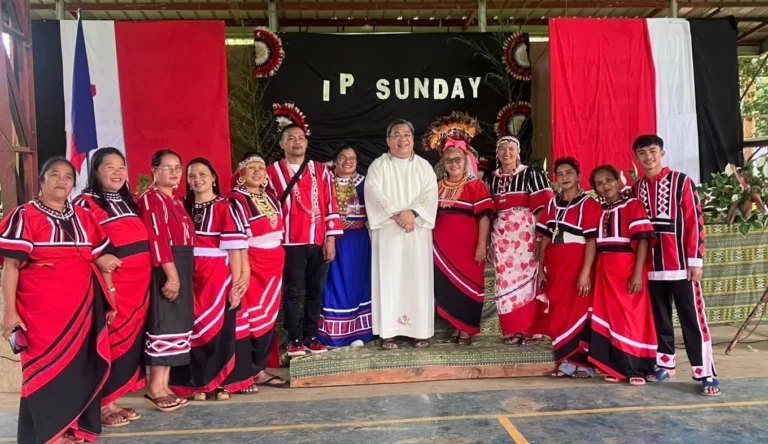
Walking with the Lumad Towards a Future of Dignity and Hope
Nestled in the heart of Mindanao, the Bukidnon Mission District (BMD) stands as a living testimony to the enduring mission of the Society of Jesus in the Philippines. For over a century—since the Jesuits resumed their presence in the country in the late 1800s—they have faithfully served the people of Bukidnon. While the number of Filipino Jesuits may be dwindling, the spirit of their mission remains vibrant, especially in the margins, where they walk closely with the indigenous Lumad communities of the province.
At present, ten Jesuits remain active in Bukidnon, serving across a variety of ministries: Indigenous Peoples Ministry, education, parishes, and retreat-giving. United by Ignatian spirituality, their work emphasizes accompaniment with the poor, youth engagement, ecological care, and faith formation rooted in local cultures. And among those who benefit most from these ministries are the indigenous communities of Bukidnon, who, through these efforts, are being seen and recognized, heard, and celebrated as people of dignity.
Accompaniment Through Education and Formation
Education is one of the most transformative ways the Jesuits continue to support the indigenous peoples of Bukidnon. Below are three institutions currently under the care or run by the Jesuits.
The St. Therese School of Miarayon
Founded in 1997 with the Talaandig community, this school provides the only accessible high school education in its remote mountain valley between Mt. Kitanglad and Mt. Kalatungan. With most of its students coming from indigenous backgrounds, the school forms young minds with a blend of academic learning, cultural identity, and Jesuit values, making it a key pillar of holistic, inclusive development.
Pangantucan Community High School (PCHS)
PCHS integrates faith and farming in a context-sensitive curriculum that equips Lumad youth and farmers’ children to become agri-entrepreneurs and servant-leaders. Emphasizing stewardship of the land and sustainability, it teaches students to see farming not just as livelihood—but as vocation, leadership, and service to their communities.
Apu Palamguwan Cultural Education Center (APC)
This community-based school promotes mother tongue-based, culturally rooted education for the Pulangiyēn and other Lumad groups. Its vision of “walking with the land” reinforces values of sustainability, identity, and peacebuilding—affirming that education can be truly empowering when grounded in indigenous wisdom and tradition.
The Fr. Leoni Mission Foundation, Inc. (FLMFI): Nurturing Indigenous Leadership and Resilience
Through the FLMFI—whose current staff consists of former FLMFI scholars, alongside Indigenous Elders as partners—the Jesuits implement deeply impactful programs such as IP LEAD and IP RISE.
IP LEAD (Leadership, Education, Advocacy, Development)
This program accompanies the next generation of indigenous youth leaders, instilling spiritual integrity, ancestral values, and advocacy skills. With scholarships like Kapawa Hu Paglaum (for college) and Binhi Paglaum (for high school), the program fosters culturally grounded leadership—building voices that speak with agency and pride.
It doesn’t stop at formation. IP LEAD amplifies indigenous narratives through campaigns, dialogues with government, and cultural expressions—ensuring the Lumad are not just represented but respected in national conversations.
IP RISE (Resilience, Integrity, Solidarity, Empowerment)
With its Holistic Development Framework, IP RISE supports entire communities across six interconnected areas: cultural-spiritual life, education, health, socio-economic empowerment, environmental stewardship, and community governance. This is not charity—it is solidarity, with communities leading their own journey toward dignity and self-sustainability.
Pastoral Presence: Rooted and Responsive
The Jesuits also accompany communities through their parish ministries, which function as both spiritual centers and social anchors:
- Mary the Queen Parish, Zamboanguita
- Therese of the Child Jesus Parish, Miarayon
- San Francisco Javier Mission Station, Tikalaan (established 01 June 2025)
These parishes not only nurture faith but also embed the Church in the real, daily concerns of indigenous life, providing spaces for prayer, dialogue, support, and community-building.
With the growth of the Diocese of Malaybalay and fewer Jesuits available, questions naturally arise about the future of the Jesuit mission in Bukidnon. Yet, what emerges is not decline—but transformation.
The Jesuit presence in BMD continues to serve as a bridge, rooted in Ignatian values but responsive to evolving local needs. Lay collaborators, mission partners, and empowered indigenous leaders are now co-creators of mission—evidence that Jesuit ministry in Bukidnon is not ending but multiplying in form.
Jesuit Retreat House-Malaybalay
The Jesuit Retreat House in Malaybalay City, established in 1982 and entrusted to the Society of Jesus in 1992, serves as the formation center for the Bukidnon Mission District. The JRH-Malaybalay promotes evangelization through Ignatian Spirituality and the Retreat Apostolate. Catering to priests, religious, laypeople, and student groups from public and private schools, it provides spiritual guidance and support to all, especially helping young people navigate their life journeys. For over three decades, it has been a place of transformation, renewal, and deepened faith.
A People of Dignity: Seen, Heard, and Celebrated
The legacy and continuing role of the Jesuits in Bukidnon is best captured in one word: accompaniment.
They do not impose, dictate, or dominate. They walk with—listening, discerning, and acting boldly with the people. Through schools, cultural education, youth leadership, livelihood, and spiritual and pastoral ministries, the Lumad of Bukidnon are not only being served—they are being empowered to tell their own stories, shape their own futures, and celebrate their dignity as a people created in the image of God.
In a world that often marginalizes the indigenous, the Jesuits in Bukidnon remind us that true mission happens when we see each other as partners, neighbors, and kin—where education, faith, and culture intersect to give birth to hope.
Grace in Return
Often unspoken in the story of the Jesuit presence in Bukidnon—beyond their service, empowerment, accompaniment, and friendship with the indigenous people—is the quiet truth of how much they themselves have received. The Jesuits assigned to this mission have been deeply shaped by the lived realities of the people: their struggles and triumphs, their joys and sorrows, their hopes and dreams, and their indigenous culture and tradition. These encounters became gifts—formative experiences that helped shape them into more grounded, compassionate priests and brothers, ultimately enriching the Society of Jesus itself. Many young Jesuits—formands, priests, and brothers—were profoundly formed by their pastoral journey in Bukidnon.
Enduring Presence
The Jesuits’ role in the Bukidnon Mission District today continues to evolve, but its core mission remains the same: to seek and serve God in all things, especially in the faces, struggles, and hopes of the indigenous peoples they walk with. May this mission continue to bear fruit for generations to come.
–—–
Fr. John Lester “Bongbong” Tajon, SJ, originally from Pinili, Ilocos Norte, spent his early childhood in Manolo Fortich, Bukidnon. Before entering religious life, he worked as an Electrical Engineer for EEI Corporation at the RCBC Plaza Project in Makati City. He joined the Jesuits on 30 May 2002 and was ordained to the priesthood on 13 April 2013. Shortly after, he was missioned to Cambodia where he had earlier served as a Jesuit Regent for two years. Father Bongbong completed his years of service in the Jesuit Mission in Cambodia in December 2024. He now serves as Parish Priest of St. Therese of the Child Jesus–Miarayon Parish, executive director of the Fr. Leoni Mission Foundation, Inc., and as new superior of the Bukidnon Mission District.