
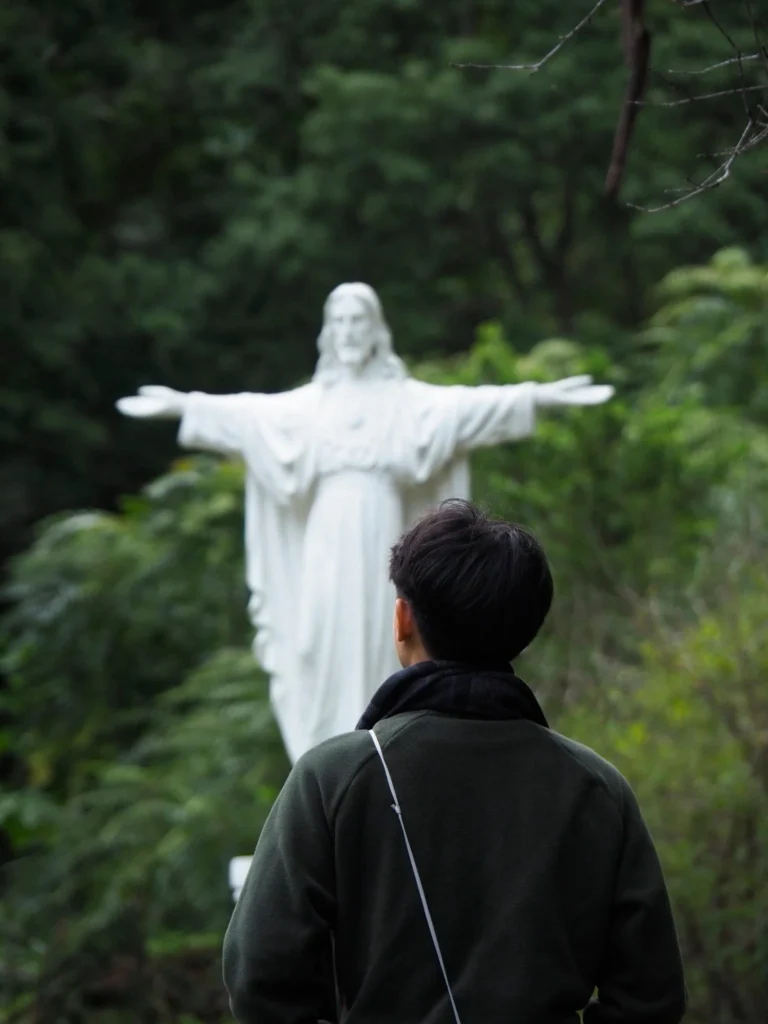
The JCAP MAGIS Youth Gathering in Taiwan led me back to a truth I had long known, yet rarely lived fully. From 26 December 2025 to 3 January 2026, Taiwan became a vibrant crossroads of faith, culture, and companionship as Magis Asia Pacific 2025 unfolded.
Organized by the MAGIS Youth Center of the Chinese Province of the Society of Jesus, the gathering welcomed nearly a hundred young people and youth animators from more than ten countries across the Asia Pacific region, and even Poland. Together with the Jesuits of the Chinese Province, the full MAGIS Youth Center team, and newly formed Ignatian youth in Taiwan, participants were warmly accompanied through encounters with Jesuit mission work, deep moments of sharing, and a rich immersion in Taiwanese culture.
At the heart of the experience was a rediscovery of the First Principle and Foundation of the Spiritual Exercises of Ignatius of Loyola, that our lives are meant to praise, reverence, and serve God, not in theory, but in the ordinary choices we make each day.
Before this experience, I often treated faith as something important but postponable. I believed in God, participated when I could, and tried to do good. However, I also clung tightly to my own plans, comforts, and timelines. I measured life by productivity, success, and control, thinking that as long as things were going well, I was doing fine. I was half foot in and half foot out. I rejoiced in God’s love, yet during the challenges of life I tended to get constricted by my own thoughts—thoughts of despair, anxiety, and fear.
This MAGIS experience gently unraveled that illusion. Through shared prayer, honest conversations, moments of silence, and encounters with people whose lives are shaped by both hardship and hope, I began to understand that faith is not about arranging life to avoid discomfort. It is about learning to desire what leads us closer to God even when that path is uncertain, humbling, or uncomfortable.
This gathering was not a journey as a tourist, but as a pilgrim. Transformation did not happen in grand moments alone, but in the in between. In walking with others, in listening to stories of suffering and resilience, in letting go of expectations, and in allowing myself to be vulnerable. In these spaces, I experienced grace, not as something earned, but as something received.
I learned that true freedom does not come from having more, achieving more, or securing every outcome. It comes from holding life with open hands. From being willing to choose faithfulness over comfort, meaning over ease, and love over control. In learning this, I experienced healing, companionship, and a deeper clarity of mission.
MAGIS taught me that the purpose of our lives is not to cling to what we prefer, but to discern what draws us closer to God and to one another. Whether in joy or struggle, certainty or doubt, abundance or lack, we are invited to choose what leads us toward deeper love. I return from this experience changed not because everything is now clear, but because my heart is more attentive. Faith is no longer something I set aside for later. It has become a compass, quietly guiding how I see the world, how I walk with others, and how I choose the path ahead, even if it hurts.
During the Magis Experiment, I was part of the Ecology Group, and as a nature lover myself, I loved every bit of it. The Ecology Experiment comprised different activities that reminded us of our interconnectedness with one another and our environment. Essentially, that we are all gardeners of God’s creation.
One of the things that made me truly happy during this time was finally arriving at my own understanding of what the term magis means for me. I always knew that magis is a Latin word for “more,” but I often associated it with doing more. More activities, more service, more effort. However, through the Ecology Group, I came to realize that magis is not primarily about doing more, but about being more. It is not simply a list of actions to accomplish, but a way of living and becoming. Being more attentive, more responsible, more caring, especially as gardeners of God’s creation.
As we reflected on our interconnectedness with one another and with the environment, I understood that magis calls us to live with deeper awareness and intention. It invites us to become people who care not only through what we do, but through who we choose to be. In this sense, magis is not something I perform, it is something I embody. Therefore, magis is not something to do but rather something to be. And in this process of becoming, we invite God to work His way through us, so we can be more for others and for His creation.
During the experiments, I lived with a Taiwanese family. This experience became one of the most meaningful parts of the journey. In a letter to them, I wrote:
“O mama Chou, papa Lin, and Joseph,
I am beyond grateful for the gift of experiencing a foster family in Taiwan. As part of the Ecology MAGIS Experiment, this was one of the opportunities given to us. However, it became so much more than just an activity.
You welcomed us with such warmth that it immediately made my heart feel at home. I know gege Joseph feels the same way. During a time when we were far from our own families and our own country, you made us feel like we truly belonged to yours.
The hugs, the smiles, the quiet care, and the comfort you gave so generously are things I will always treasure. These are memories I will carry with me wherever I go. Even though there was a language barrier, it never felt like one. This is because our hearts were open to each other and that was more than enough.
Thank you for loving us so sincerely and for making our stay so meaningful. I will never forget how you made me feel, welcomed, cared for, and at home.”
Looking back at the photos and videos I took during the whole MAGIS gathering, I cannot help but appreciate the grace of companionship that God poured out during the trip. I was touched by many things during my stay in Taiwan, but perhaps one of the most profound was the sense of solidarity I found with everyone there.
Being the only one coming from Mindanao, even meeting people from Luzon felt a little intimidating. How much more when I realized I would be surrounded by people from across Asia Pacific and even as far as Poland. Yet these worries slowly changed as I realized that despite our language barriers and cultural differences, there was something that somehow drew us closer to each other. Like a calm presence. Like a binding force.
We could not communicate deeply through words. We used plain and basic English, relied on body language, and sometimes Google Translate. But when it was time to say goodbye, it was incredibly hard. We felt a deep connection with one another, like we were indeed family. That was when I realized that we shared the same universal language, God’s love. We may not have conveyed it through words, but through our presence, it left a mark on each one of us that God was at work in our lives. Not because we were perfect, but because we were broken, and we gathered there sharing that brokenness.
I heard stories of war, stories of broken hearts, stories of shattered dreams, and even stories of persecution. These were fresh perspectives as I heard the Catholic faith from the point of view of the minority, only one percent in their countries. It inspired me to appreciate my belief more deeply and to value human connection even more.
In the end, it was not a matter of mere religion, but of shared humanity. People choosing to truly see, care for, and walk with one another, believing that such love is always worth it.
As the Jubilee Year Pilgrims of Hope comes to a close alongside this trip, I carry home a renewed sense of hope. Hope meant to be lived, shared, and offered to others.
Thank you, Taiwan. Thank you, JCAP. Thank you, MAGIS Asia Pacific.
—–
Eric Joseph C. Bernasor is a 3rd year student from Xavier University Ateneo de Cagayan completing his Bachelor of Science in Business Administration major in Marketing Management. His hobbies include sports, music, writing, and he enjoys meaningful conversations. He also believes in the beauty of finding God in everyday life and shared experiences.