
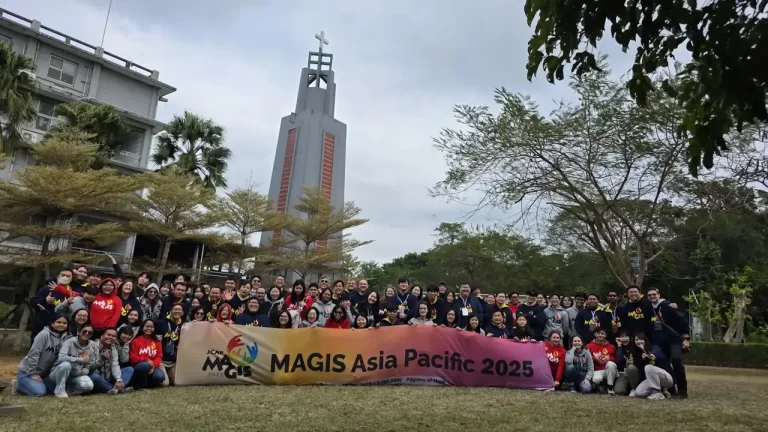
In the days between Christmas and the New Year, Taipei, Taiwan became a place of quiet grace and deep encounter as young people from across the Asia Pacific gathered for the Jesuit Conference of Asia Pacific (JCAP) MAGIS Gathering. Coming from different cultures, languages, and lived realities, they arrived as individuals seeking meaning and adventure—looking for community and reconnecting with old friends—but left as companions, bound together by prayer, shared experience, and the unmistakable presence of God at work among them.
For the Filipino delegates—Carissa Purugganan, Chesco Magbiray, and Dan Cabangunay from Ateneo de Manila University; Madel Macalino and Eunice Fuentes from Ateneo de Naga University; and Eric Bernasor from Xavier University—the gathering unfolded not as a single defining moment, but as a series of gentle invitations: to slow down, to listen more deeply, to be present to one another, and to recognize that grace is not something to be earned, but something already given. Over nine days of prayer, reflection, immersion, and community life, MAGIS became less about doing more and more about learning how to receive, and, in turn, to share.
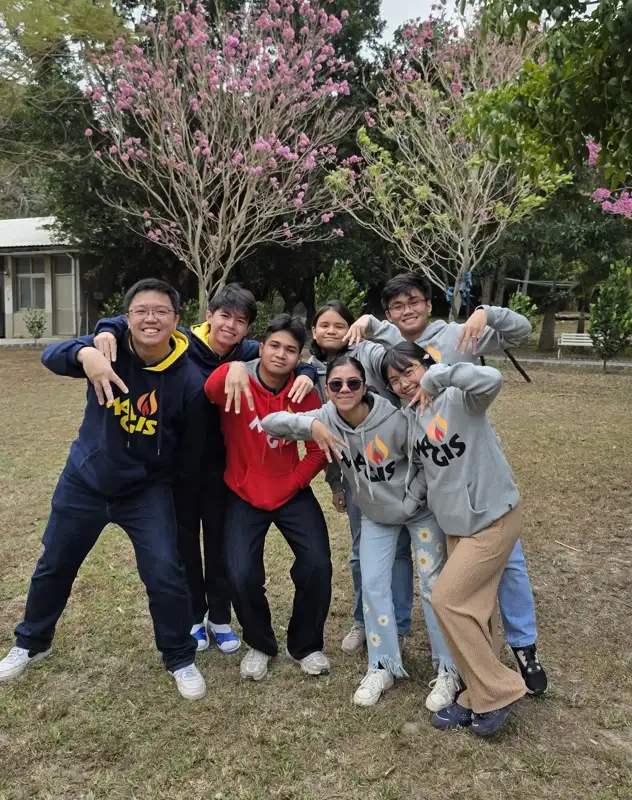
The second day of the gathering opened with a reflective conference on the life of St. Ignatius of Loyola. Drawing from Ignatius’ own journey, marked by woundedness, searching, and deep conversion, the talk invited participants to see how Christ continues to work in and through their personal histories, struggles, and unanswered questions. In a special way, the reflection helped the youth recognize that their wounds and uncertainties are not obstacles to faith, but privileged places where God labors, heals, and calls them to deeper freedom and mission.
From the very beginning, participants sensed that this journey would challenge their assumptions. Many arrived carrying a familiar understanding of magis, as striving, excellence, and self-giving. Yet as the days progressed, this understanding began to soften and deepen. Through warm welcomes, shared silence, and simple moments of companionship, magis was revealed not as pressure, but as invitation.
One participant reflected that the experience taught her that magis does not always mean pushing oneself further, but allowing oneself to be loved more deeply. In encountering a God who did not demand perfection, she discovered a freedom that transformed how she saw herself and her faith. This realization echoed across many testimonies: God’s love was encountered not in extraordinary achievements, but in presence, in being fully where one is.
Throughout the gathering, the youth regularly engaged in the Jesuit Three Rounds of Sharing, reflecting on how Jesus continues to transform their lives and lead them each day. In an atmosphere marked by prayer and attentive listening, they first shared personal experiences of faith, moments of grace, struggle, healing, and hope. They then listened deeply to one another, naming what resonated and what stirred their hearts. Finally, as a community, they discerned the invitations of the Spirit and the direction in which Christ might be leading them. Through this simple yet profound Ignatian practice, the youth experienced Jesus as truly present and active, guiding them forward with hope and generosity.
MAGIS moments, however, were not confined to prayer rooms and conferences. They were often most alive around the table. Over shared meals filled with laughter and stories, the youth freely exchanged life experiences, cultures, and faith journeys. Different backgrounds, accents, and perspectives did not divide them; instead, they enriched conversations and strengthened bonds. In true MAGIS spirit, diversity became the spark for deeper connection: turning strangers into friends and meals into moments of unity, joy, and shared mission. At the heart of the gathering was encounter—encounter with God, with oneself, and with others. This became especially concrete as the delegates prepared for the MAGIS experiments, which invited them to step out of routine and discover God in surprising, life-giving ways.
Eric and Dan joined the Ecology experiment, journeying into care for creation. There, they learned to love God by loving the Earth; getting their hands dirty while helping protect Taiwan’s wildlife and supporting school initiatives on waste segregation and sustainable recycling. Through this experience, care for creation was revealed not as an abstract idea, but as a concrete expression of faith.
Chesco, Madel, and others chose the Indigenous immersion, living with the Atayal people of Formosa Island. Through shared stories, traditions, and daily life, they encountered wisdom rooted in a deep relationship with the land, learning that faith is often passed on through memory, community, and reverence for creation.
Carissa joined the Pilgrimage experiment, walking from church to church and shrine to shrine in the spirit of St. Ignatius of Loyola. With tired feet, light packs, and growing trust in God’s providence, the journey became a prayer in motion; teaching her that God is found not only at the destination, but along the road itself.
Eunice and her companions immersed themselves among marginalized communities—the homeless, migrants, fisherfolk, and market vendors. There, Christ was encountered in real stories, shared meals, and simple presence, revealing a God who dwells at the margins and invites His followers to do the same.
Meanwhile, I joined the religion and culture immersion, encountering non-Catholic Christians, Muslims, Jews, Buddhists, Daoists, and Hindus. Through genuine dialogue, listening, and friendship, I was reminded that openness to others does not weaken faith; rather, it deepens it, grounding belief in humility and mutual respect.
As the year turned, MAGIS Philippines welcomed the New Year at Manresa Retreat House in Changhua City, gathering with fellow MAGIS participants from across the region for an evening of barbecue, laughter, and fellowship. As grills came alive, so did conversations. Stories were shared, cultures exchanged, and friendships formed in the simplest and most joyful way. Surrounded by international companions, the celebration became more than festivity; it became a lived experience of community, reminding all present that MAGIS is ultimately about people.
The New Year was also welcomed in song and prayer, as delegates lifted their voices together in praise of the Lord Jesus Christ. In the stillness and joy of music, the community gave thanks for the year that had passed and entrusted the year ahead to God, entering 2026 with grateful hearts, renewed hope, and a shared desire to live the magis in all things.
Soon after, the delegates entered an overnight silent retreat at Manresa Retreat House. In the quiet and prayerful atmosphere of this sacred place, they were invited to slow down and allow the experiences, encounters, and graces of the past days to settle gently in their hearts. Through silence, personal prayer, and reflection, they listened more deeply to God’s voice and discerned how He had been at work throughout the journey. A particularly moving moment was spending the night in silent adoration before the Blessed Sacrament. Keeping watch in prayer, the delegates rested in Christ’s presence. In the stillness of the night, hearts were opened, graces deepened, and the gentle voice of the Lord became clearer, inviting each one to greater trust, generosity, and love.
As the gathering drew to a close, goodbyes were inevitable, and painful. Yet even in parting, participants recognized grace. The sadness of leaving was itself a sign of how deeply they had been touched. After sharing the graces received, the delegates journeyed to Lukang, where food, sightseeing, and fellowship offered a final space of encounter. Walking through historic streets, enjoying local delicacies, and sharing laughter, they celebrated gratitude, rest, and the bonds formed along the way.
I am sure that when the Filipino delegates returned home, they carried with them more than memories of travel or international exchange. They carried a renewed vision of faith, rooted in encounter, companionship, and trust in God’s quiet work. MAGIS taught them that ordinary moments can become sacred, that differences can become bridges, and that discernment is a lifelong practice of attentiveness.
From Taipei back to the Philippines, what began as a gathering became a sending—an invitation to live with greater awareness, generosity, and hope. In a world often marked by fragmentation and noise, the JCAP MAGIS Gathering offered a different way: to walk together, to listen deeply, and to share the grace that has first been received.
In many ways, the experience mirrored the journey of the disciples on the road to Emmaus. Like them, the young people did not always recognize what was happening as it unfolded; yet, in walking together, listening deeply, sharing stories, and opening their lives to one another, their hearts were quietly set aflame. Only in looking back did meaning become clear. As they return to their own communities, their shared prayer finds words in the Gospel: “Were not our hearts burning within us while he spoke to us on the way and opened the scriptures to us?” (Luke 24:32). In this burning of hearts, the MAGIS journey continues: now lived, shared, and carried forward in mission. In this way, MAGIS was not simply an event. It was—and remains—a way of life.
Bien Emmanuel C. Cruz, SJ is a Jesuit deacon. He is currently in formation, engaging in academic, pastoral, and community apostolates. He is also involved in the Province’s Vocation Promotion Team and engaged in various activities in the Ateneo de Manila University.