
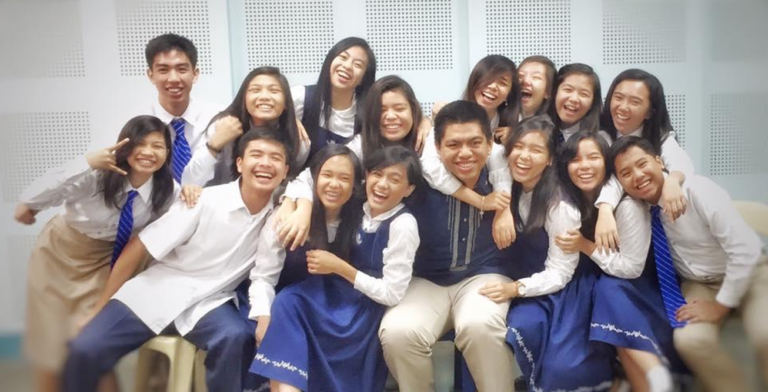
I did not come from a perfect family. Like many young people I now work with, my own story began with uncertainty, longing, and an earnest search for belonging. But it was within the walls of a school that I first found a sacred haven—a place that welcomed me wholly, where my imperfections were not hidden but embraced, and where the seeds of my desire to empower others were first planted.
School, for me, was not just a place for academics; it was a sanctuary. I remember staying longer than necessary after classes—volunteering for projects, joining activities, writing and producing the school paper, and, at times, simply finding solace in the company of classmates and mentors. It was in these spaces of youthful engagement that I discovered what it meant to be empowered. Not through grand speeches or awards, but through everyday companionship, encouragement, and the quiet assurance that I mattered.
Some afternoons, I would rather be in school than at home. And those moments—of being with friends, of being listened to by teachers, of being seen—spelled the difference between despair and hope. These encounters gave me comfort but also direction. I knew then, deep in my heart, that I wanted to become a teacher.
This desire would eventually take me to the Ayala Foundation Inc., where I began my career as a Youth Development Associate. There, I was part of the team that organized the Ayala Young Leaders Congress, a platform that gathered inspiring youth leaders from across the country. I saw firsthand how the youth could rise above their circumstances and be catalysts for change. This further solidified my conviction: that their struggles were not liabilities, but rather raw materials for generosity, resilience, and magnanimity.
Eventually, this same passion brought me to consider becoming a Jesuit. In 2010, I entered as a prenovice and lived at the Haggerty House, while teaching at Xavier University Junior High School (then Xavier University High School). After two years of discernment, I realized that while I deeply admired Jesuit life, my vocation felt more at home in the classroom. I felt most free and fulfilled empowering the youth—one class, one student, one encounter at a time.
Now, after more than 15 years of teaching, my understanding of youth empowerment has deepened. It is no longer just about giving voice to the young, but about walking with them, especially in their most vulnerable moments. Many of our students spend more time in school not just because they are eager learners, but because they are quietly avoiding difficult situations at home. And so, I remain present for them.
As I journey with them, I’ve learned this truth: accompaniment demands not just presence, but discernment rooted in reflection. Each student is a sacred story unfolding. And often, we are invited into these stories during their most fragile chapters. We need wisdom and courage to know when to act, when to hold space, and when to seek help. Truly, it takes a village. And that village, too, must be strong, discerning, and united in putting the child’s well-being above all else.
One reality we face with growing urgency is the mental health of our students. The influence of social media, the pressures of academic life, and the weight of unspoken struggles have led to heightened needs in their socio-emotional well-being. But I see this not just as a crisis, but as an opportunity for educators to respond with compassion, creativity, and community.
At Xavier Ateneo Junior High School, I am blessed to work alongside companions who go beyond their job descriptions. Their love for students is not performative—it springs deeply from a place of cura personalis. It is in these hidden acts of service and accompaniment that I see the soul of Jesuit education come alive.
While we often hear that the youth are the future, I have come to believe otherwise. The youth are the present. Their capacity to serve, lead, and care is already in motion. Just recently, we witnessed students exemplify heroic empathy and quick action in helping someone in deep emotional distress. In a graceful and compassionate moment, they reached out and offered support that helped ensure the person’s safety. Because of this, the group was honored with the Scholastic Richard Michael Fernando Award—a recognition given to students who, like Richie Fernando, offer their lives in service and love for others. Richie’s legacy reminds us that selfless acts, however quiet or ordinary, can echo loudly with hope.
Others lead immersion activities, tutor public school pupils in English and Math, and facilitate formation sessions with their peers. They are not waiting for a future to give—they are already giving now.
As a teacher, I see God’s hand in these moments. Each young person carries within them a sacred spark—a gift that must not only be discovered but nurtured. Our role is to help them recognize that their leadership is already unfolding in how they love, care, and serve today.
But love must also be honest and formative. Empowering the youth means helping them understand that not every door opens immediately, that falling is part of learning, and that failure is not the end, but a step in the growth process. We must allow them to wait, to struggle, and to feel disappointment. In doing so, they build clarity, confidence, and courage.
Through the years, I’ve seen fruits bloom quietly. Two students I once moderated are now teachers in our Senior High School. One will soon join Teach for the Philippines, while another has twice been recognized as an outstanding moderator. A former student passed the physician licensure exam after a failed first attempt, now proudly holding a license to heal. A civil engineer visited me, sharing how he now works with the Department of Public Works and Highways, serving the nation with integrity. I have a former student leader trying to discern his vocation to the Jesuits in Arvisu, and another serving as a Jesuit Volunteer in Iloilo City. In their stories, I find encouragement—proof that what we do matters, even when we don’t always see it right away.
In the everyday grind of teaching—lesson planning, grading, endless meetings—it’s easy to forget why we do this. But then, a former student comes back with a story, a smile, a mission. And I remember.
Being with the youth is not just about guiding them. It’s about loving them enough to stay. To show up. To listen. To believe in their worth, especially when they cannot yet see it for themselves.
In all this, I return to my own story—the boy who once stayed behind in school to find peace. Now, as a teacher, I try to be the peace others seek. Not because I am whole, but because I was once held when I was broken.
May we never tire of being with the youth. Because in doing so, we don’t just shape futures—we take part in the quiet and sacred work of healing and transformation that’s already happening today.
—
Samuel Macagba III was an educator and formation leader at Xavier University – Ateneo de Cagayan. He served as the Assistant Principal for Formation in the Junior High School, guiding students in their academic, spiritual, and personal growth. With years of experience in teaching and administration, he has also contributed to research and community engagement initiatives. He currently works at the City Education and Development Office of the local government of Cagayan de Oro City. He is a yoga instructor who promotes well-being and mindfulness among students and colleagues. He is passionate about education as a means of empowering individuals and communities.