
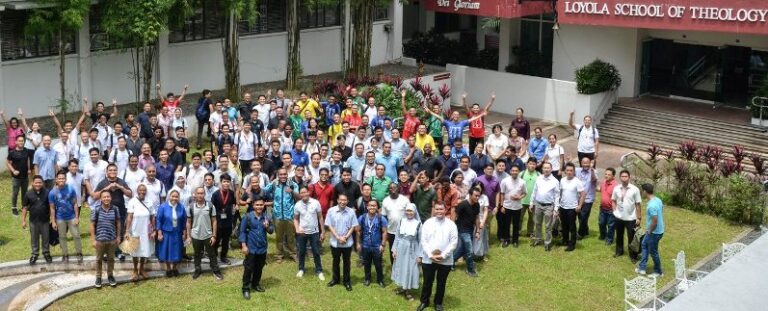
Loyola School of Theology (LST) stands as a beacon of academic excellence and spiritual formation in the Philippines. Situated in Quezon City, within the Ateneo de Manila University campus, LST plays a pivotal role in shaping the theological landscape of the country and beyond. As an Ecclesiastical Faculty of Theology, it not only educates seminarians, priests, and religious, it also forms lay leaders equipped to serve the Church and society at large. Its mission aligns with the vision of a theology that is both deeply rooted in the Catholic tradition and responsive to contemporary challenges, particularly in the Philippine and Asian contexts.
LST’s history reflects a journey of resilience, adaptation, and growth. Its roots can be traced to the founding of Colegio de San Jose in 1601, which laid the foundation for priestly formation under Jesuit mentors in the Philippines. This marked the beginning of a legacy that would influence generations of Church leaders. In 1621, Pope Gregory XV issued a brief authorizing the Archbishop of Manila to confer degrees, including degrees in theology, on the candidates presented to him by the Rector of the Jesuit College of Manila, in which the students of the Colegio de San Jose attended lectures. This marked the beginning of Jesuit theological education in the Philippines. Over the centuries, the institution has undergone significant changes, each contributing to its evolution into a premier center for theological education.
The expulsion of the Jesuits from the Philippines in 1768 disrupted their educational efforts. Despite this setback, the Colegio de San Jose persisted under the administration of the secular clergy and later became part of the University of Santo Tomas in 1875 as a school of medicine and pharmacy. The Jesuits regained administration of the Colegio de San Jose in 1910, renewing their focus on priestly education. This period marked a revitalization of their mission, culminating in the recognition of San Jose Seminary as an interdiocesan seminary for the entire Philippines in 1953 by the First Plenary Council of the Philippines. This milestone underscored its national importance and its role in shaping the clergy of the country.
A significant transformation occurred in 1965 when the Provincial Superior of the Society of Jesus in the Philippines, Fr. Horacio de la Costa, with the authorization of the Jesuit Superior General Fr. Pedro Arrupe, opened the Loyola House of Studies “School of Theology and Ecclesiastical Studies” (STES). This initiative combined the philosophy faculty of Berchmans College in Cebu City and the theology faculty of San Jose Seminary at Highway 54, creating a unified academic institution dedicated to theological education. Classes commenced at the current site within the Ateneo de Manila University in 1965, and the institution adopted the name “Loyola School of Theology” in 1972. This marked the beginning of a new era for LST, as it expanded its academic offerings and solidified its reputation as a center of excellence.
LST’s affiliation and eventual aggregation with the Theological Faculty of Fujen in Taipei in 1984 and 1994, respectively, were other significant milestones. This enabled the school to grant the canonical degrees, further enhancing its academic credentials. On 13 August 1999, LST achieved a historic milestone when it was officially established as an Ecclesiastical Faculty of Theology, authorized to confer degrees in Sacred Theology, including the Baccalaureate in Sacred Theology (STB), Licentiate in Sacred Theology (STL), and Doctorate in Sacred Theology (STD). This recognition underscored LST’s commitment to academic rigor and its role in preparing leaders for the Universal Church.
Today, LST is a vibrant academic and spiritual community. In the First Semester of the Academic Year 2024-2025, LST boasts a diverse student body of 511 individuals. This includes seminarians, priests, religious, and lay students. Of these, 53.4% are Filipino, while 46.6% are international, representing 43 countries, 87 religious congregations, and 42 dioceses. Such diversity underscores LST’s transition from primarily serving the local Church to becoming a center for the Universal Church. Its students and graduates contribute to the Church’s mission worldwide, serving in various capacities and addressing the needs of their communities.
LST’s reach extends beyond its campus through affiliations with two key theological centers. St. John Vianney School of Theology in Cagayan de Oro, Philippines, affiliated with LST in 2017, and its status was renewed in 2023. Similarly, St. Joseph Jesuit Scholasticate Theological Institute in Saigon, Vietnam, affiliated with LST in 2018, and its affiliation was renewed in 2023. These partnerships reflect LST’s commitment to theological education and formation across the global Church. By extending its academic and spiritual resources to these institutions, LST contributes to the formation of Church leaders in diverse contexts, enriching the Universal Church’s mission.
LST’s contributions to Philippine society and beyond are manifold. As a center for theological reflection and pastoral formation, it serves as a vital resource for addressing contemporary challenges. Its graduates, equipped with rigorous academic training and spiritual depth, go on to serve in various regions of the world. Whether ministering in parishes, teaching in seminaries, or engaging in social justice initiatives, LST alumni embody the Jesuit ethos of being men and women for others. This commitment to service reflects the institution’s mission to form leaders who can respond to the needs of the Church and society with wisdom, compassion, and faith.
LST is deeply committed to serving the poor and sharing the joy of the Gospel. Inspired by the Jesuit tradition of promoting faith and justice, the institution integrates this mission into its academic and pastoral programs. Students are encouraged to engage in outreach activities, social justice initiatives, and ministries that address the needs of marginalized communities. By fostering a culture of service and solidarity, LST ensures that its graduates are not only knowledgeable in theology but also deeply committed to living out the Gospel message in their lives and ministries.
The institution’s impact extends to its academic programs, which are designed to address the needs of the contemporary Church. These programs provide students with a solid foundation in Catholic theology while encouraging them to engage with contemporary issues. By fostering a spirit of inquiry and dialogue, LST prepares its students to navigate the complexities of modern ministry and leadership.
LST’s current 73 dedicated faculty members and many others who have taught in LST are the cornerstone of its success. Composed of theologians, scholars, and practitioners from various fields, the faculty brings a wealth of expertise and experience to the classroom. Their commitment to academic excellence and pastoral formation ensures that students receive a holistic education. Faculty members also contribute to theological scholarship through research and publications, enriching the broader academic community. This dedication to intellectual and spiritual growth reflects LST’s commitment to excellence in all aspects of its mission.
The institution’s facilities and resources further enhance its academic environment. Located within the Ateneo de Manila University campus, LST benefits from state-of-the-art facilities, including libraries, research centers, and conference spaces. These resources provide students with the tools they need to excel in their studies and contribute to the Church’s mission. Additionally, the campus’s serene environment fosters reflection and spiritual growth, creating a supportive space for theological education and formation.
LST’s impact on the Universal Church is evident in the achievements of its graduates. Over the years, LST alumni—some of whom have been appointed by the Holy Father as bishops—have gone on to serve in various capacities, from parish ministry to academic leadership. Their contributions reflect the institution’s emphasis on academic excellence, spiritual depth, and a commitment to service. By forming leaders who are prepared to address the challenges of the contemporary Church, LST fulfills its mission to serve the Universal Church with distinction.
The institution’s global reach is further exemplified by its international partnerships and affiliations. These collaborations enable LST to share its resources and expertise with theological centers around the world. By fostering dialogue and cooperation, these partnerships enrich the global Church’s mission and contribute to the formation of leaders in diverse contexts. This commitment to global engagement underscores LST’s vision of a theology that is both deeply rooted in tradition and responsive to contemporary challenges.
LST’s history and achievements testify to its enduring commitment to theological education and formation. From its humble beginnings in 1601 to its current status as a premier center for theological education, LST has remained faithful to its mission. Its journey reflects a legacy of resilience, adaptation, and growth, shaped by the challenges and opportunities of each era. As it continues to grow in size and influence, LST remains steadfast in its mission to prepare leaders who will serve the Universal Church with wisdom, compassion, and faith.
In conclusion, the Loyola School of Theology stands as a testament to the Jesuit tradition of academic excellence and spiritual formation. Its rich history, vibrant present, and promising future reflect its unwavering commitment to theological education and formation. By preparing leaders who can address the needs of the Church and society, LST honors its Jesuit heritage while embracing the challenges and opportunities of the 21st century. Through its mission, LST continues to shape the theological landscape of the Philippines and beyond, contributing to the Universal Church’s mission of faith, justice, and service for the greater glory of God and the service of Mother Church and all mankind.