
Mindanao is different for every person who calls it home. As someone who was born and raised in Cagayan de Oro, part of Northern Mindanao, the island has always been a cradle of simple joys and of many vibrant stories. As someone who continues to live and work in Mindanao, it is the land of opportunities and untapped possibilities.
To an outsider, Mindanao is complex, and, unfortunately because of years of negative portrayal, even violent or dangerous. This could not be further from the truth. While it is true that there are conflicts, these do not make up the fabric of the Mindanaoan experience or identity.
Schools play a vital role in developing Mindanaoan values and identity, so much so as every classroom in Mindanao is multicultural and diverse. In my school, Xavier University – Ateneo de Cagayan, we reflect on social cohesion, and how to build more equitable systems for all. We work on developing literacy and critical thinking to hone citizens who can evaluate information and who can contribute solutions to ‘wicked’ problems. We cherish and nourish the creative spirit, with the aim of forming holistic individuals. We emphasize the importance of interfaith dialogue and activities and work towards a more inclusive school community.
But while this is my experience at my own school, there are some schools that do not enjoy these because of the lack of governmental support or because they have been asked to shut down. Reports state that over 250 Lumad schools have been shut down since 2019, and more continue to close, robbing Lumad learners of much-needed education to sustain themselves and their communities. Similarly, BARMM continues to have the lowest participation and completion rates across all levels of formal education, while Islamic schools in Mindanao struggle to gain recognition and support from the government. These disrupt the development of a more socially cohesive society as education is seen as a vital social instrument during times of conflict, offering young people safe spaces.
There is also a constant divide of language, religion, and beliefs—both personal and political—that continues to affect how students learn in their own classrooms. The concerns that arise from Mindanao are multifaceted and require intersectional approaches from various disciplines. But the Mindanaoan spirit is resilient and hopeful. It gathers strength from adversity and finds harmony in diversity.
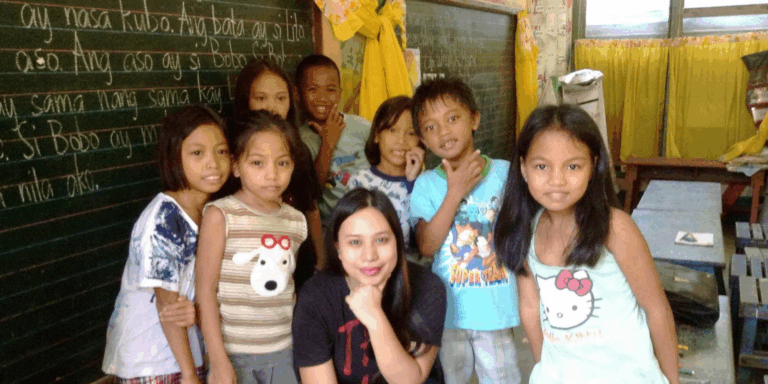
Some years back, I volunteered for a literacy program for young students at St. John Elementary school. St. John is a school with several Sama Dilaut or Bajau students whose families earn a living through the sea—usually through pearl-diving, selling them as jewelry to tourists. Teachers note their chronic absenteeism, mentioning that they ‘come and go as they please.’ In my conversations with them, I found out that they don’t come to school often because they need to help their parents find money for food. They play their drums and dance on the street, depending on motorists’ kindness. The Bajau are largely discriminated against, with the term ‘Bajau’ being tossed around to mean ‘freeloader’, or ‘poor.’ Like other indigenous communities, they also have their own practices and belief systems, one that entails time. These cultural activities often clash with class schedules, and when given a choice, they said they’d rather be in a place where they are celebrated, rather than shunned, for being who they are. Situations like these emphasize the need for better systems for learners who come from diverse cultures, one that does not undermine their rich heritage, while at the same time supports their holistic learning inside and outside the four walls of the classroom.
As a teacher who wishes to see a better future for her island, my hope lies in fellow educators who choose to stay and serve in Mindanao.
I hope that we recognize our important role in uplifting students—especially at this time when they are hypercritical of themselves and each other.
I hope that we continue to stretch the extra mile for our students whose only hope in getting further in life is getting a good education.
I hope that we continue to teach students grace and for us to model the same grace and kindness in an increasingly individualistic time.
I hope that we continue to choose Mindanao, especially in the face of overwhelming opportunities outside the island and the country. To remain despite the challenges staying entails.
My hope is also for students to be rooted to their home, and to bring a part of who they are wherever they go.
I hope that students can learn to love their own and will not forget where they come from. For them not to reject and abandon their Mindanaoan identity but to grow with Mindanaoan values: respect, inclusion, openness, and resilience at the core.
I hope that students continue to think, act, and work together towards peace, especially in these divisive times. For them to engage in meaningful dialogue and discussions aimed at building a more compassionate society.
I hope that students persist in valuing their education, seeing it not only as a way to a better life, but also as a means to deepen their personal convictions.
I hope that students see the good in everything and everyone, and that they see God in all things, especially in times of conflict.
I hope that students keep their faith strong, and that they let their faith be lived out through acts of social justice. May it be faith in the Lord, in Allah, in Magbabaya, Apo Sandawa, or Manama, I hope that this faith be made visible through acts of service especially for those in the peripheries.
It is in these hopes that I continue praying, learning, and working in the place that I call home.
Adeva E. Kalidas is an English teacher at Xavier University Junior High School. She is also an artist, a poet, a writer, and a notable researcher in Education and Mindanaoan culture. She is currently a doctoral student at the Gokongwei Brothers School of Education and Learning Design.